Showing posts with label Canada. Show all posts

Sunday, November 27, 2011

Yoho National Park - Canada


Yoho National Park, which lies in the Canadian Rocky Mountains, has an area of 1,313 sq km (507 sq mi), and it is the smallest of the four national parks in the Rockies, but its beauty is grand. The site of marvelous mountains, rivers, waterfalls, clear lakes and wide meadows was declared a World Heritage Site in 1984.

Vancouver- Canada


Vancouver, the harbour city beautifully located on the Burrard Peninsula between Burrard Inlet and the Fraser River in British Colombia, Canada, is a mecca for virtually all enthusiasts of museums, excellent restaurants, cafes, clubs, and in general, for fans of vibrant urban life. A large number of various rankings and surveys have proved that Vancouver is the best city in the world to live in. Besides its cultural, architectural, and infrastructural advantages, the city's natural beauty of nearby beaches, mountains, and forests makes it one of the world's most stunning metropolises.

Wednesday, May 5, 2010

Tourist guide Edmonton

Edmonton, the capital of Alberta, is the state’s second largest city. With a population of about 800,000, it is often referred to as ‘The City of Champions’. It houses the West Edmonton Hall, which is the largest shopping mall in the world.
The climate in Edmonton is typically pleasant and sunny. Summers are mild and it’s known to be one of Canada’s sunniest cities. The city’s four seasons are quite unpredictable. Snowfall starts in the month of November.
After being hit by a tornado in 1987, the city recovered and was on the path to prosperity by the late 1990s. The main focus of the economy in recent times has been oil and gas.
Edmonton was incorporated as a township in 2004.

Tourist guide Banff


Banff, in Alberta, is an important cultural as well as commercial centre. It is located in the famous Banff National Park.

Banff, with a population of around 8000 inhabitants, bustles with a host of cultural activities.
The climatic conditions in Banff are inconstant; perhaps one of the reasons for this is its high elevation. Most of summer sees long days and average temperatures. Autumn and winter are more pleasant seasons. Banff receives maximum rainfall in June.

Banff is the hub of numerous cultural activities. It is the main economic centre of the Banff National Park. With 11,000 years of strong and elegant history, Banff was formed as a township in 1990.

Thursday, December 3, 2009

Perce

Tourist guide Perce
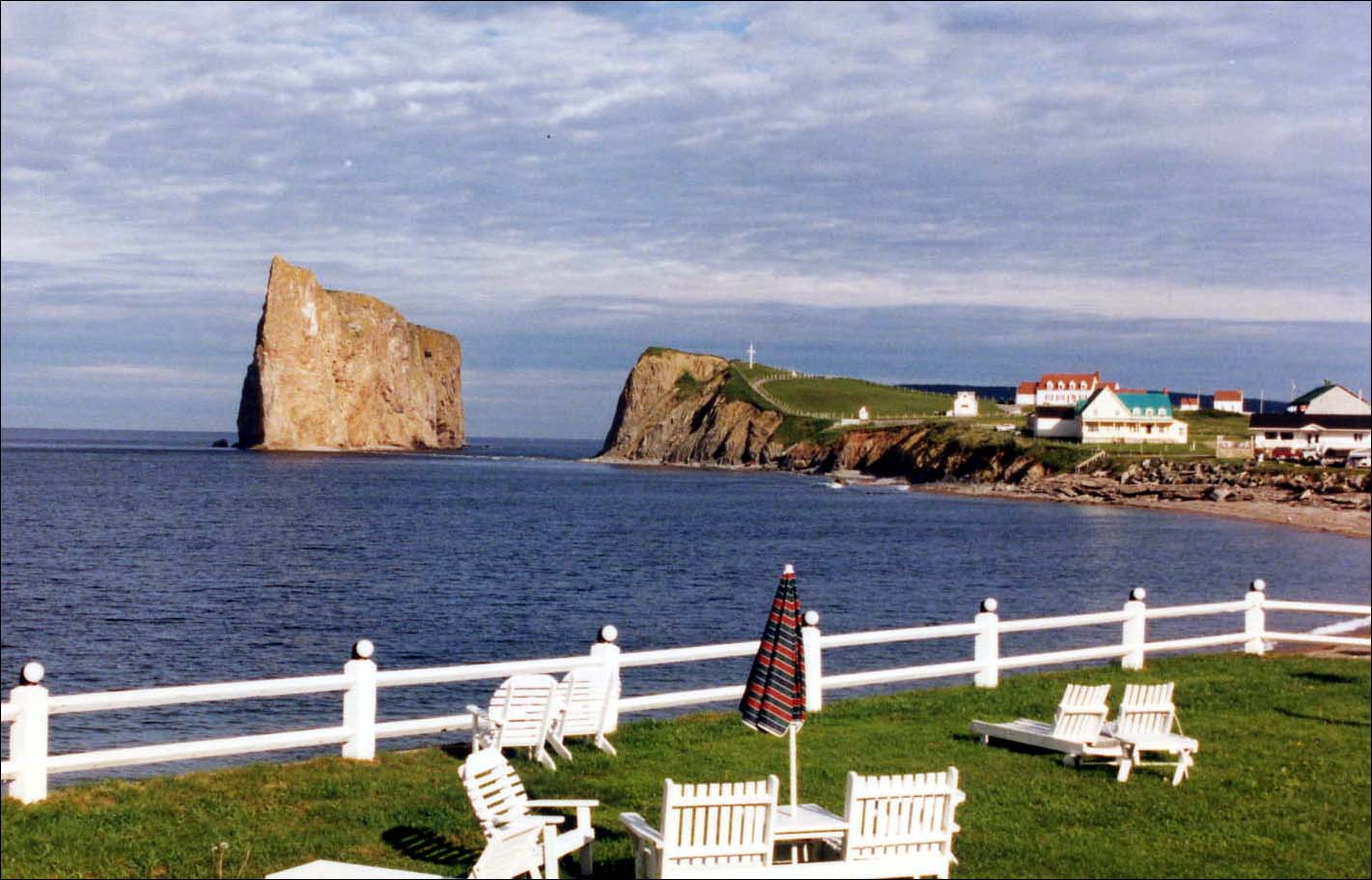
In Quebec, Canada, close to the tip of the Gaspe Peninsula is a tiny village called as Perce. The area of this village as a municipality is 432.39 square kilometers. The main attraction in this village is Perce Rock.  The other known attractions are the Interpretation Center, several souvenir shops, Bonaventure Island, Hote Cousing, museums and scenic trails. People from all over the world are enticed towards this fascinating village each year. The tourists usually enjoy several local artists of Gaspe. Those who visit the Bonaventure Island can see almost one hundred types of birds like puffins, sea gulls, gannets and the popular fou-bassin. Those who are fortunate may even see a whale.

As per the 2006 census, the population of Perce was 3419.

Perce has four seasons throughout the year. Spring is from April to the end of June. Winter is from November to the end of March. Fall is from September to the end of October. Summer is from the end of June to the end of August.

Tofino

Tourist guide Tofino


 Tofino can be described as a hamlet located along Vancouver Island’s west coast; in British Columbia, Canada.

Tofino settlement acquired name for the 1st time in the year 1909; with opening of Tofino Post Office. It had been named in collaboration with ‘Tofino Inlet’ nearby. In the year 1792, Tofino Inlet got named so by Valdes and Galiano, Spanish commanders; to honor Admiral Vicente Tofino. It was under him that Galiano had grasped cartography.

Tofino is said to receive the highest rainfall all over British Columbia. Georgia Basin which includes Gulf Islands, Vancouver Island, Sunshine Coast, and Vancouver- happens to lie in Vancouver Island’s rainshadow. July proves to be the hottest month; with temperature of around 72 degree F; whereas January to be the coolest; with temperature of around 43 degree F.

Population of Tofino has been estimated to be 1650. 

Tofino Bus executes the task of serving Port Alberni, Nanaimo, Vancouver, and Victoria.

Monday, November 16, 2009

Canada Vacations and Tourism Guide


Surface: The total land area of Canada is around 9,093,507 sq km.

Population:  The population of Canada is around 33,390,000.

System of government: Canada has a constitutional monarchy that is a parliamentary democracy and a federation.

Capital: Ottawa, with a population of 1,148,800, is the capital city.

Religion: Canada has no official religion. 72% of the Christian population are Roman Catholics. Non- Christian religions are also present.

Official Language: The official languages are English and French.

Government: Canada has a constitutional monarchy that is a parliamentary democracy and a federation.

Climate: The climate is artic towards the north with long, cold winters and brief, warm summers. The western and south-eastern parts of Canada experience high rainfall.

Units of measure and electricity: Canada follows the metric system of measurement and the official electricity unit is 120V, 60 Hz.

Time Zone: Canada follows six time zones and has daylight saving time.

Currency: Canadian dollar (CAD).

Travel documents required: Visas are necessary for travel to Canada.
Economy
The Canadian economy is dominated by the service, logging and oil industries. It has also witnessed an impressive growth in the manufacturing, mining and fishing industries. Exports account for roughly one-third of the GDP. Canada is the largest foreign supplier of oil, gas, uranium and electric power to the US, which consumes about 85% of Canadian exports.
The average cost of living in Canada is very reasonable. Hotels, dining and travel are not very expensive.
States: Vacations and Tourism
Alberta British Columbia Manitoba
New Brunswick Newfoundland North West Territories
Nova Scotia Nunavut Ontario
Prince Edward Island Quebec Saskatchewan
Yukon --
More Places
Oakville Tofino Sudbury
Fort McMurray Ferme-Neuve Ancienne-Lorette
Pincher Creek Gananoque Sussex
Kananaskis High Level Welland
Huntsville Saint Catharines Burlington
Guysborough Dartmouth Perce
Orford Squamish Richmond
Carnbrook Brentwood Bay Chicoutimi
Wentworth Wendake Waterloo
Tadoussac Isle-aux-Coudres Chateau-Richer

Friday, August 21, 2009

Canadian Rockies


Canadian Rockies is one of the most spectacular places of the earth. This place has potential outdoor opportunities and world class resorts. Visit the two national parks of Canadian Rockies and find why most of the travelers choose Canadian Rockies as their home away home .This place offers you the best of the best. It offers you the hikes that you don’t want to miss, scenic drives and many more natural highlights. You can go for the vacation even along with your children.Winter is a great time to enjoy the place. During this time, you can try sports like skiing, snowshoeing and then relaxing around a roaring fire on every evening.

Wednesday, August 19, 2009

NIAGARA FALLS

The Niagara Falls are voluminous waterfalls on the Niagara River, straddling the international border between the Canadian province of Ontario and the U.S. state of New York. The falls are 17 miles (27 km) north-northwest of Buffalo, New York and 75 miles (120 km) south-southeast of Toronto, Ontario, between the twin cities of Niagara Falls, Ontario, and Niagara Falls, New York. Niagara Falls is composed of two major sections separated by Goat Island: Horseshoe Falls, the majority of which lies on the Canadian side of the border, and American Falls on the American side. The smaller Bridal Veil Falls are also located on the American side, separated from the main falls by Luna Island. Niagara Falls were formed when glaciers receded at the end of the Wisconsin glaciation (the last ice age), and water from the newly-formed Great Lakes carved a path through the Niagara Escarpment en route to the Atlantic Ocean. While not exceptionally high, the Niagara Falls are very wide. More than six million cubic feet (168,000 m³) of water falls over the crest line every minute in high flow,[1] and almost 4 million cubic feet (110,000 m³) on average. It is the most powerful waterfall in North America.[2] The Niagara Falls are renowned both for their beauty and as a valuable source of hydroelectric power. Managing the balance between recreational, commercial, and industrial uses has been a challenge for the stewards of the falls since the 1800s.